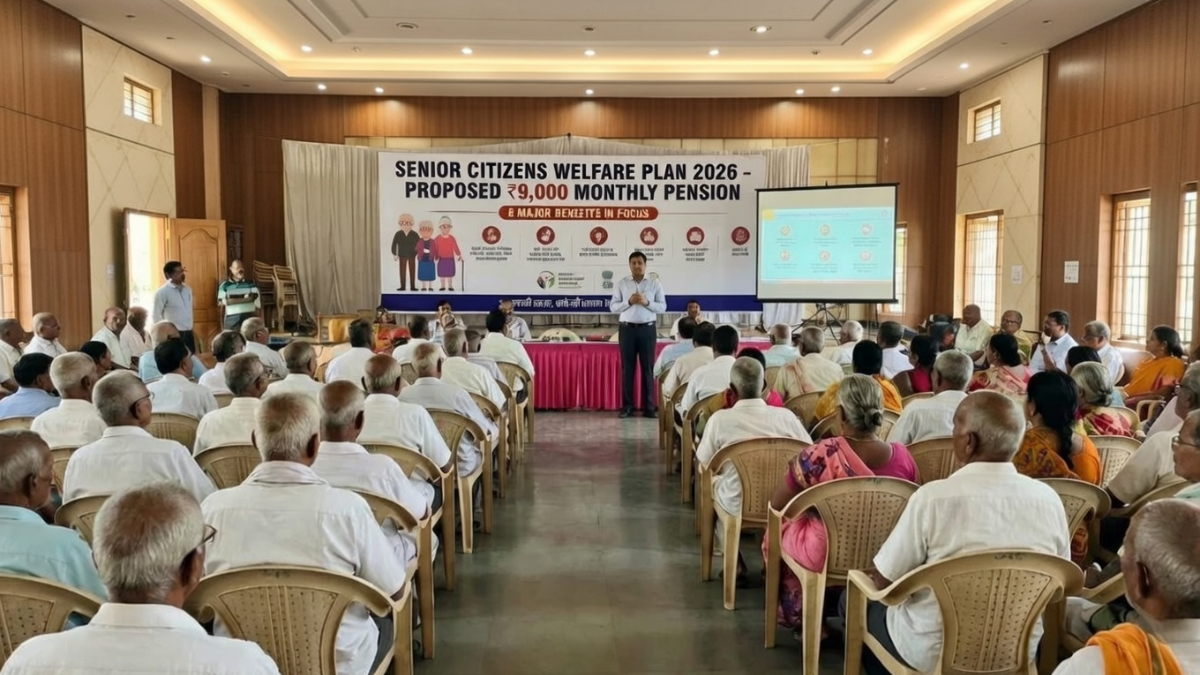
India’s senior citizens are at the centre of a major policy discussion in 2026 as the proposed Senior Citizens Welfare Plan gains momentum. With rising healthcare costs, inflation, and longer life expectancy putting pressure on retirees, the proposal aims to strengthen financial security and social support for elderly citizens across the country.
At the heart of the plan is a proposed ₹9,000 monthly pension, combined with a broader set of welfare measures designed to improve dignity, independence, and quality of life for seniors.
Why the Senior Citizens Welfare Plan Is in Focus in 2026
India’s ageing population is growing rapidly, and a large section of senior citizens lacks access to stable retirement income. Existing old-age pension schemes often provide limited monthly support, which struggles to cover essential expenses such as food, medicines, rent, and utilities.
The 2026 welfare proposal reflects a policy shift toward more comprehensive elderly support, with the Government of India exploring ways to strengthen income security and social protection for senior citizens.
₹9,000 Monthly Pension Proposal Explained
The proposed ₹9,000 monthly pension is intended to provide predictable and adequate income support rather than fragmented or irregular assistance. If approved, it would represent a significant increase compared to many current state and central pension schemes.
The objective is to ensure that senior citizens can meet basic living expenses without complete dependence on family members, particularly in urban areas where costs are higher.
Who the Proposed Pension Is Likely to Benefit
While final eligibility criteria are yet to be announced, the proposal is expected to prioritise senior citizens from low-income and middle-income backgrounds. Elderly individuals without formal employment pensions or substantial savings are likely to be the main beneficiaries.
Age thresholds, income limits, and asset criteria are expected to determine eligibility, ensuring the scheme targets those most in need.
8 Key Benefits Being Considered Under the Welfare Plan
The Senior Citizens Welfare Plan 2026 is designed as a holistic support framework rather than a single pension scheme. Below is the only bullet-point section in this article, outlining the eight key benefits currently under discussion, written in sentence format.
• A proposed ₹9,000 monthly pension to provide stable income for daily living expenses.
• Expanded healthcare support, including subsidised treatment and essential medicines for seniors.
• Enhanced health insurance coverage specifically tailored for age-related medical needs.
• Priority access to government hospitals and public healthcare facilities.
• Increased travel concessions on public transport to support mobility and independence.
• Housing and rental assistance for elderly citizens without secure accommodation.
• Digital and financial inclusion support to help seniors access banking and government services.
• Stronger legal and social protection measures to safeguard senior citizens from neglect or abuse.
How This Plan Differs From Existing Senior Schemes
Most existing senior welfare schemes focus on either pensions or healthcare, often offering limited benefits in isolation. The 2026 proposal stands out by combining income support, healthcare, housing, and social protection into a unified framework.
If implemented effectively, this approach could reduce the complexity of accessing multiple schemes and make welfare delivery more efficient for elderly beneficiaries.
Is the ₹9,000 Pension Confirmed Yet
At present, the ₹9,000 monthly pension should be viewed as a proposal rather than a confirmed nationwide payout. Budget allocations, legislative approvals, and implementation timelines will determine the final structure of the plan.
However, strong policy discussions and public focus on elderly welfare suggest that enhanced support for senior citizens is a growing priority.
Why Senior Citizen Welfare Is Becoming a Policy Priority
Longer life expectancy means retirees require financial and healthcare support for extended periods. Without adequate systems, many seniors face the risk of poverty, poor health outcomes, and social isolation.
Strengthening senior welfare also reduces pressure on families and healthcare systems by ensuring elderly citizens can meet basic needs independently.
What Senior Citizens and Families Should Do Now
Senior citizens and their families should monitor official announcements and keep essential documents such as age proof, income details, and identification updated. Being prepared will help ensure quicker access if the scheme is approved and rolled out.
Local welfare offices and official government portals are expected to provide detailed guidance once final decisions are announced.
Conclusion
The Senior Citizens Welfare Plan 2026, featuring a proposed ₹9,000 monthly pension and eight key benefits, represents a significant step toward improving financial security and dignity for India’s elderly population. While final approval is still awaited, the proposal highlights a clear shift toward comprehensive senior welfare.
If implemented, it could become one of the most impactful welfare initiatives for senior citizens in recent years.
Disclaimer: This article is for general information only and does not confirm final approval, eligibility rules, or implementation timelines of the proposed welfare plan.