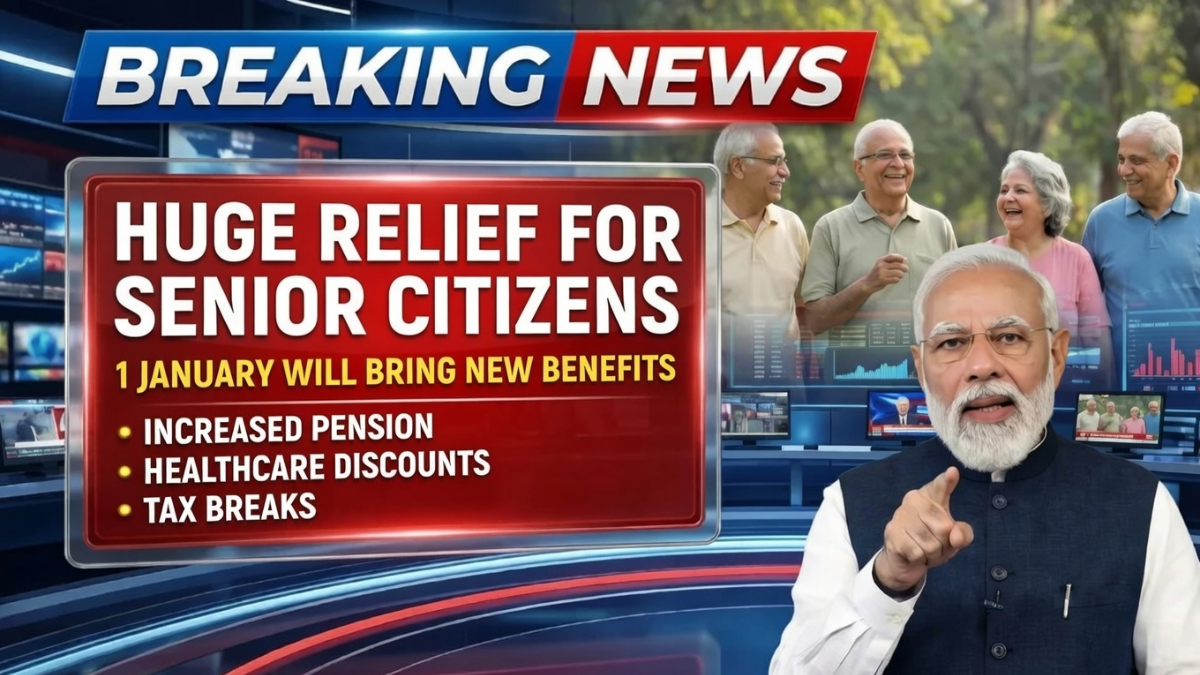
Elderly Indians are set to begin the new year with stronger financial and social support as the government rolls out a package of major benefits for senior citizens from January 1. With rising healthcare costs, inflation, and longer life expectancy placing pressure on retirees, these measures are being positioned as a meaningful step toward improving dignity and security in old age.
The initiative reflects a broader push to strengthen senior welfare through a mix of income support, healthcare access, and social protection, rather than relying on isolated or short-term schemes.
Why Senior Citizen Benefits Are Being Expanded Now
India’s ageing population is growing rapidly, and a significant number of senior citizens depend on limited pensions, family support, or personal savings. For many, existing benefits have struggled to keep pace with everyday expenses such as medicines, utilities, and housing.
From January 1, the updated approach signals stronger commitment from the Government of India to address these challenges through coordinated welfare measures rather than fragmented assistance.
7 Major Benefits Rolled Out for Senior Citizens
The new year package focuses on improving both financial stability and access to essential services. Below is the only bullet-point section in this article, outlining the seven major benefits being rolled out or strengthened from January 1, written in sentence format.
• Enhanced pension support to improve monthly income stability for elderly citizens with limited earnings.
• Expanded healthcare assistance, including subsidised treatment and essential medicines for age-related conditions.
• Improved health insurance coverage designed specifically for senior citizens’ medical needs.
• Priority access to government hospitals and public healthcare facilities to reduce waiting times.
• Increased travel concessions on public transport to support mobility and independence.
• Housing and rental support initiatives for seniors without secure accommodation.
• Stronger legal and social protection measures to safeguard elderly citizens from neglect, abuse, or exploitation.
How These Benefits Improve Daily Life for Seniors
Together, these measures aim to reduce financial stress while improving access to essential services. Higher pension and healthcare support help seniors manage recurring expenses, while travel and housing assistance promote independence and social participation.
Legal and social protection components are particularly important in addressing vulnerabilities that often go unnoticed, ensuring seniors feel safer and more supported.
Who Is Likely to Benefit the Most
Senior citizens from low-income and middle-income households are expected to see the greatest impact. Elderly individuals without formal employment pensions, widows, and seniors living alone stand to benefit significantly from stronger income and healthcare support.
Urban seniors facing higher living costs may also experience meaningful relief from the expanded benefits.
How This Differs From Previous Welfare Measures
Earlier senior welfare initiatives often focused on a single area, such as pensions or healthcare, with limited reach. The January 1 rollout is notable because it combines multiple forms of support under a broader framework, reducing reliance on separate schemes.
This integrated approach is intended to make welfare delivery more effective and accessible for elderly citizens.
Is This the Final Form of Senior Welfare Reform
While the January rollout represents a major step, it may not be the final phase of reform. Senior welfare continues to be an evolving policy area, and further enhancements could follow based on feedback, budget capacity, and demographic trends.
Ongoing monitoring will determine how effectively the benefits reach intended recipients.
What Senior Citizens and Families Should Do Now
Senior citizens and their families are encouraged to stay informed through official announcements and ensure key documents such as identification, age proof, and income records are up to date. Being prepared can help seniors access benefits smoothly as implementation progresses.
Local welfare offices and government platforms are expected to provide guidance on eligibility and procedures where applicable.
Conclusion
The rollout of seven major senior citizen benefits from January 1 marks a significant boost for elderly Indians. By strengthening pensions, healthcare, housing, mobility, and protection, the government is taking a more comprehensive approach to senior welfare.
While challenges remain, these measures represent an important step toward ensuring greater security, dignity, and quality of life for India’s ageing population.
Disclaimer: This article is for general information only and does not confirm individual eligibility or detailed implementation rules of the announced benefits.